Potential Beneath the Surface! The circular solutions of tomorrow are found in our seas
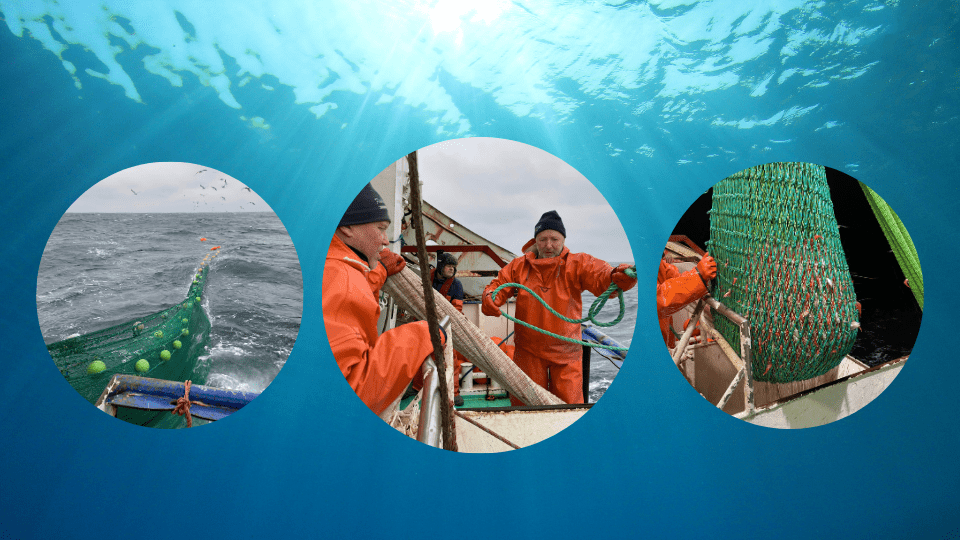
Did you know that the ocean holds answers to many of today’s climate and resource challenges? Join our own Nils Ólafur Egilsson on Sweden’s west coast and discover how a few small design adjustments have made a big difference.
Shaping the future of fishing: The work with circular shrimp trawls
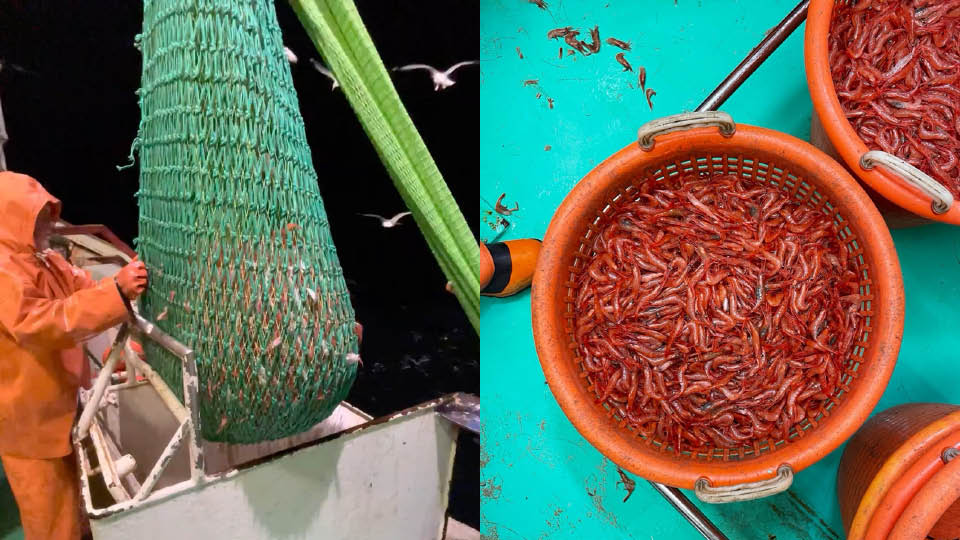
The horizon tilts as the light fades across the sky. The men’s voices rise, only to be swallowed by the roar of the sea. Trawls sink into the waves while herring gulls circle impatiently above, their cries cutting through the steady hum of the engine. Hours later, the gears rattle. A pulley strains as the trawl returns, swaying between sea and sky, until the red mass finally appears: shrimp.
This is everyday life for Sweden’s trawl fishers—shaped by tradition, pressure, and the rhythm of the sea. But behind the scenes, a quiet transformation is underway.
A Circular Vision for Tomorrow’s Gear
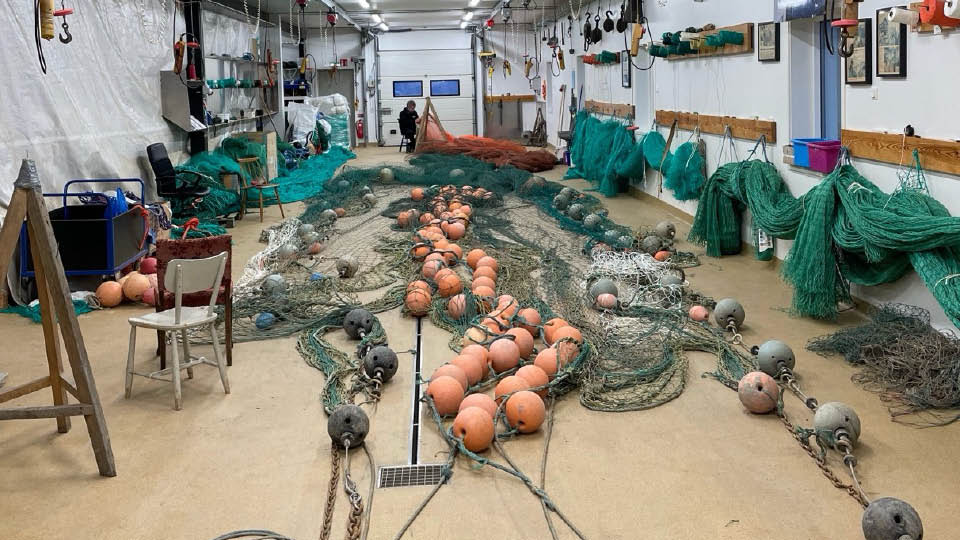
In the project Design for Circular Fishing Gear, led by Chalmers Industriteknik on assignment from the Swedish Agency for Marine and Water Management, the goal is as clear as it is ambitious: to redesign shrimp trawls so they last longer, require fewer materials, are easier to repair and recycle, and never become ghost‑fishing traps or sources of microplastics.
Together with Fiskarföreningen Norden and Sotenäs municipality’s marine recycling center, the project blends design methodology, hands‑on expertise, and circular system solutions to develop the fishing gear of the future.
“It’s not only about minimizing waste or bycatch, but about helping fishermen use less fuel, replace gear less often, and work more effectively.”
– Peter Johansson
Innovation from the Deck Up
For Peter Johansson at Fiskarföreningen Norden, innovation is never abstract. It happens in the cold wind, on a rolling deck, with gear that must work every single time. Peter has spent years developing low‑impact fishing equipment that not only reduces environmental damage but supports the daily realities of fishers.
“It’s not only about minimizing waste or bycatch,” he explains, “but about helping fishermen use less fuel, replace gear less often, and be more effective.”
The newly developed circular shrimp trawl embodies this philosophy. Lighter, more streamlined, and remarkably efficient, it required less fuel during tests—an immediate economic and environmental gain. Catch levels stayed the same or increased.
In a sector where margins are razor-thin, this matters. At the same time, Peter acknowledges the challenge: with fishers under economic pressure, investing in new gear can feel risky. But his enthusiasm is unmistakable. He appreciates the collaboration with Chalmers Industriteknik and hints that more innovations are on the way.
“Including a prototype for a laser trawl,” he says with a smile.
His invitation to “come visit the guys in Smögen” speaks to a partnership built on trust, craftsmanship, and curiosity.
From Systems Thinking to Salt Spray
On the strategic and design-oriented side is Nils Ólafur Egilsson at Chalmers Industriteknik. He brings expertise in circular design and blue bioeconomy. As project lead, he maps material flows, defines circularity criteria, and ensures that each design choice supports a more sustainable fishing sector.
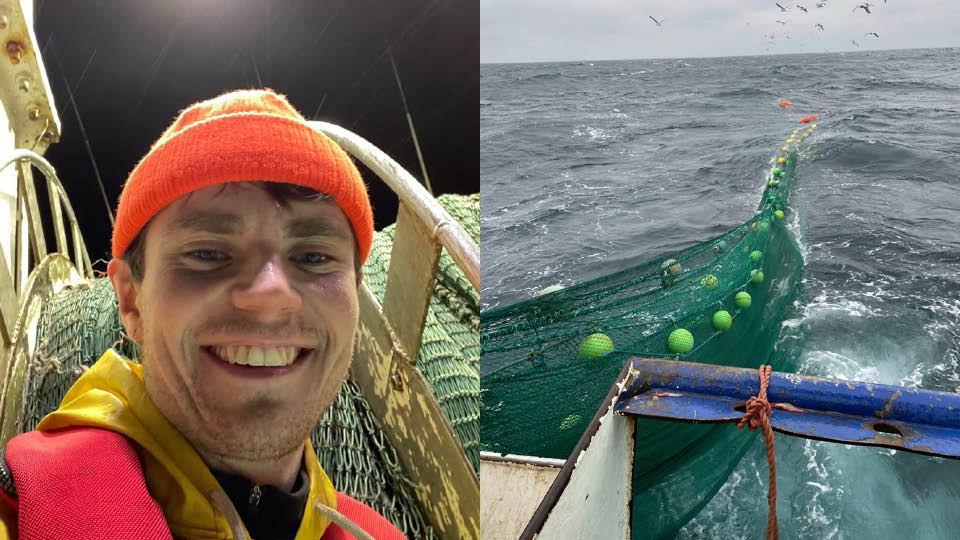
For Nils, the project has been especially rewarding—an opportunity to get away from the desk and test prototypes alongside the fishers who will eventually use them. Seeing the circular trawl in real conditions has been invaluable.
Fishers’ financial pressure makes it essential to continue demonstrating the value of new gear through data, testing, and dialogue. Nils’ broader work in the blue bioeconomy explores how system solutions, business models, and recycling infrastructure can support this kind of transition. For him, the project merges professional expertise with personal passion.
“I love being out in nature and contributing to the improvement of the marine environment. This work lets me do both.”
“The tests showed not only the trawl’s technical strengths—simpler materials, better recyclability, and maintained catch performance,” he explains, “but also the importance of developing solutions that fit the industry’s economic reality.”
– Nils Ólafur Egilsson
A Future Where Circularity Meets the Sea
When it comes to creating sustainability, Peter and Nils represent two essential perspectives—craft and system, sea and shore. With support from Sotenäs municipality’s unique marine recycling center (the only one of its kind in Sweden), their work shows how circularity becomes concrete: lighter trawls, fewer materials, easier repairs, and real opportunities for recycling at end‑of‑life.
As the trawl is lifted from the water—dripping, gleaming, and heavy with the day’s catch—it also carries another story: one of innovation, collaboration, and a steady shift toward a future where fishing and sustainability are intertwined.
Footnote: From Sea to Textile – Another Blue Innovation
Parallel to the development of circular shrimp trawls, another initiative at Chalmers Industriteknik is demonstrating how broad and dynamic the blue bioeconomy can be.
In the ALLGAE project, researchers and companies are developing algae‑based textile fibers made from side streams of Swedish‑cultivated sugar kelp and natural pigments from microalgae. The goal is to create a new circular material that replaces today’s traditional fossil‑based and bio‑based textile fibers, while eliminating the chemical‑intensive dyeing process.
“We want to create a resource‑efficient alternative that is entirely algae‑based and does not require traditional, environmentally burdensome dyeing. By integrating pigments directly into the fiber production process, water, energy, and chemical use can be drastically reduced,” says project leader Hanna Ulmefors.
The project brings together a broad partnership:
- Chalmers Industriteknik – coordination and materials expertise
- RISE – fiber development and testing from lab to pilot scale
- Manatee Biomaterials – sustainably cultivated seaweed and blue biomass processing
- Mounid – natural microalgae‑based pigments
- Houdini Sportswear – requirements, testing, and market perspective
Early results are very promising. High‑quality fibers with integrated algal pigmentation have been produced, opening the door to new business models and innovative applications for algae‑based products.
“What fascinates me most is the enormous potential of cultivated kelp. It does not compete with farmland, requires no irrigation, fertilizers, or pesticides, and can become an important driver of the green transition,” says Ulmefors.
Together with the work on circular shrimp trawls, ALLGAE shows how Chalmers Industriteknik drives innovation along the entire blue value chain—from marine raw materials to the sustainable materials of tomorrow.
We Are Passionate About the Blue Bioeconomy
The blue bioeconomy is a key pillar in the transition toward a sustainable society. At Chalmers Industriteknik, our experts drive research and innovation that strengthen circular and resource‑efficient value chains. Through system understanding, analysis, and close collaboration with industry and the public sector, we develop new opportunities in blue foods, marine biomaterials, sustainable production systems, and much more.
What Can We Do for You?
Curious about how Chalmers Industriteknik can be your strategic partner in the blue bioeconomy? Contact Maria Hammar, Director Materials & Circularity.
—–
Facts: Lost Fishing Gear in Nordic Waters
Large amounts of fishing gear are lost in the Nordic countries each year, creating a significant but often overlooked environmental problem.
Annual losses (estimated):
- 28 million lures
- 11 million sinkers
- 140 million meters of fishing line
Sweden:
- 3,900 lobster traps are lost annually on the west coast alone.
Scale:
- 6 million recreational fishers across the Nordic region contribute to cumulative losses.
Lost gear leads to ghost fishing, plastic pollution, and the spread of hazardous substances—highlighting the urgent need for preventive measures and better gear design. [havochvatten.se]
To reduce marine litter and promote a circular, non-toxic economy, the Swedish Government has tasked the Swedish Agency for Marine and Water Management with developing and implementing measures for collecting and recycling lost fishing gear and recreational boats. This mandate forms the basis for the projects presented here.


Quench your thirst for knowledge with exciting reading
Be among the first to learn about new research in the areas of Circular Economy, Applied AI, Innovation Management, Energy, and Materials. In our newsletter, we share innovative techniques and projects that make a noticeable difference in society. You will also receive tips and invitations to interesting seminars and events within our field.