The Road Toward Digital Product Passports in Halland – A Journey That Has Only Just Begun
When companies in Halland first hear about digital product passports, the reaction is often a mix of curiosity and concern. What does it mean? How will it affect us? And where do we even begin?
For Sophie Charpentier at Chalmers Industriteknik, the answer is clear:
“Digital product passports are not just another administrative burden. They are about giving companies better conditions to understand their products, their data, and their opportunities.”
This is precisely why Region Halland, EMC, and Chalmers Industriteknik spent the past year conducting an in-depth pre-study. The goal: to understand how ready the region’s SMEs are for the EU’s upcoming requirements and how to support them in taking the next step.
Early on, it became evident that many companies operate in a complex landscape of uncertain information, rapidly evolving EU requirements, and limited time to act, reinforcing the need for coordinated regional support.
“Digital product passports are not just another administrative burden. They are about giving companies better conditions to understand their products, their data, and their opportunities.” — Sophie Charpentier
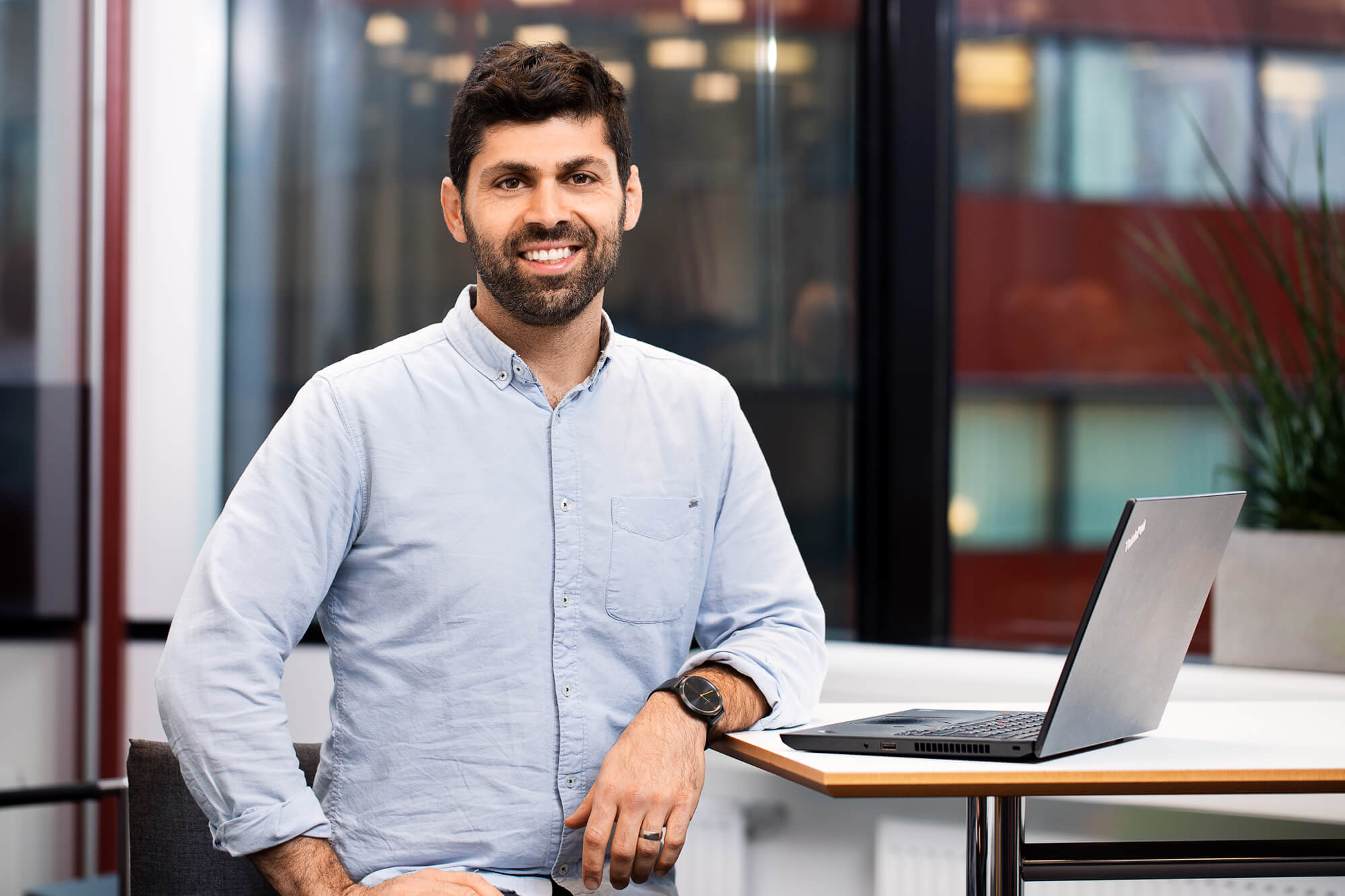
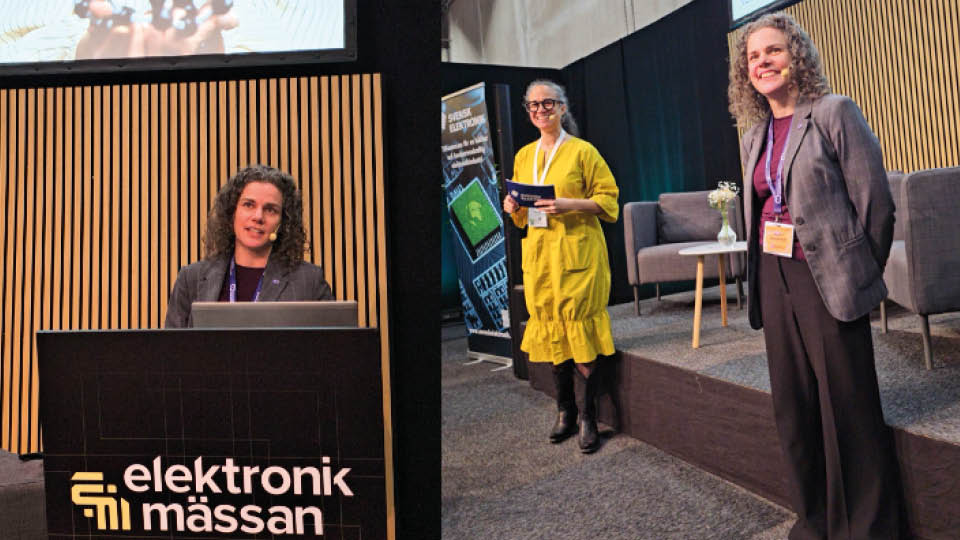 Sophie Charpentier at Elektronik Mässan, Göteborg, april 2026
A New Regulation — and a New Opportunity
The EU’s new Ecodesign for Sustainable Products Regulation (ESPR) requires that products carry digital information throughout their entire life cycle. It is fundamentally about sustainability, traceability, and transparency.
“It’s a digital system that follows the product from start to finish and sometimes into a new life,” Sophie explains.
Even though many details are still being refined in Brussels, the clock is ticking. Only a few years remain before the first requirements take effect and according to the pre‑study, there is no indication that DPP will be delayed. On the contrary, digital product information is emerging as a core infrastructure across several EU regulations.
“It’s a digital system that follows the product from start to finish and sometimes into a new life.” — Sophie Charpentier
Companies in Halland — Interested Yet Unevenly Prepared
As the project team began calling companies, visiting them, and hosting workshops, a clear picture formed.
Knowledge exists — but it is uneven. While some companies have started digitalizing their product data; others have barely begun. Many sense that something big is coming, but lack a clear roadmap.
“SMEs in Halland show low to medium maturity when it comes to digital product data,” says Sophie, “But the engagement is strong. The willingness to do the right thing is clear.”
The pre-study also revealed that many companies still rely on manual systems, fragmented data flows, and limited traceability, making compliance challenging. Only a small number have automated processes or integrated systems in place.
For both Region Halland and EMC, this has been eye‑opening.
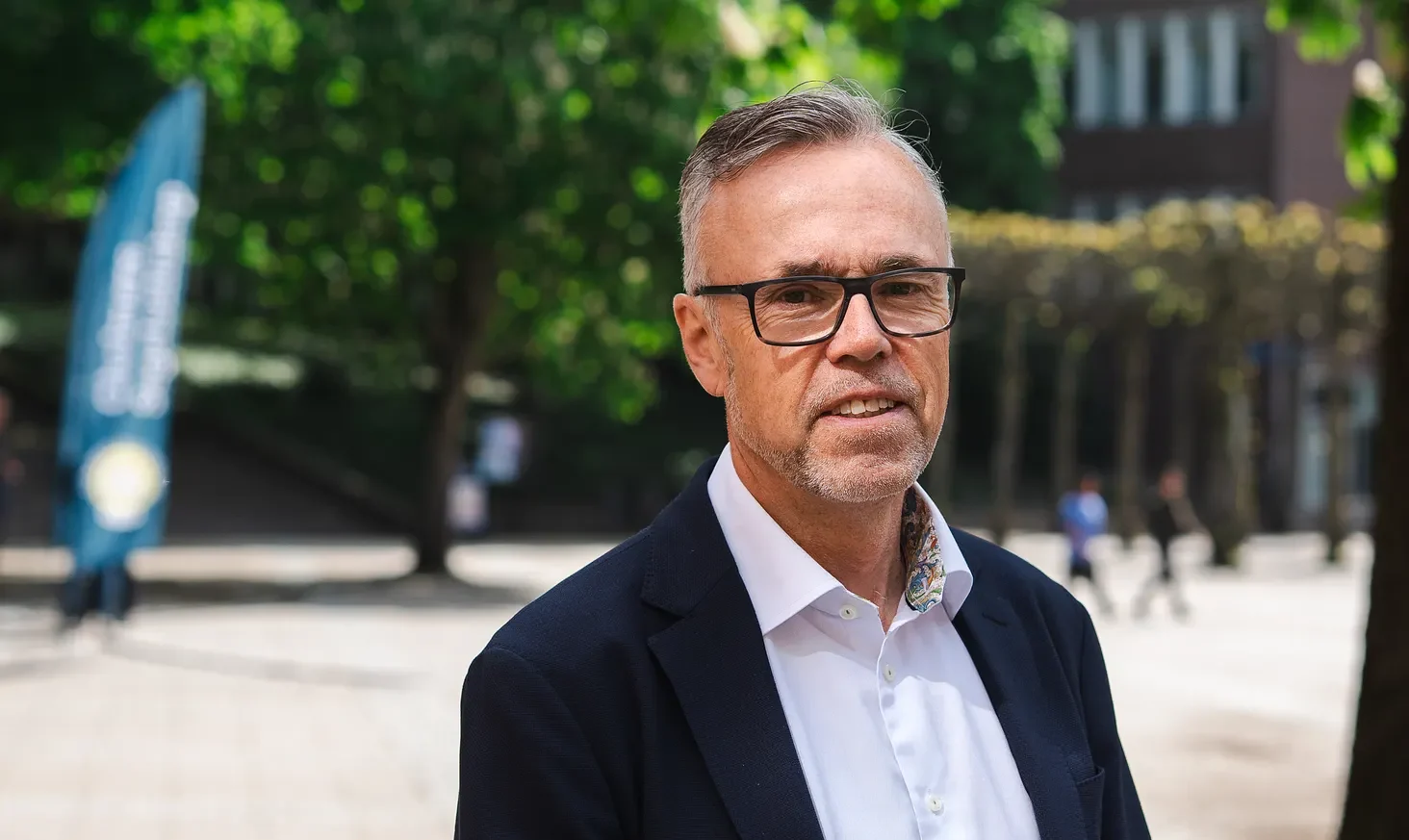
Lisa Bredahl-Nerdal from Region Halland describes the challenge:
“Product data is often scattered and lacks standardization. At the same time, SMEs have limited resources and depend heavily on other actors in the supply chain. That’s why we need to support them early and practically.”
Companies also expressed uncertainty about how to prioritize investments while EU requirements are still being finalized. An uncertainty that, according to the final report, leads some to wait longer than is sustainable.
A Journey That Requires New Paths — Not Just New Rules
One of the most important conclusions from the pre-study is that DPP should not be treated as a standalone compliance project. It would be like trying to build a roof before the walls are in place.
“Several EU regulations require similar data. If companies build smart data and system structures now, the same information can be reused multiple times,” says Sophie.
And the benefits?
More efficient processes. Better environmental data. New business models.
A stronger Halland.
The final report identifies five critical competence areas where gaps can become major barriers: the ability to manage product and supplier data, digital infrastructure and governance, organizational competence, data quality, and the ability to share information within the value chain.
Petra Löfås from EMC summarizes:
“It’s not just about meeting requirements – it’s about strengthening competitiveness and driving sustainable innovation.”
“It’s not just about meeting requirements – it’s about strengthening competitiveness and driving sustainable innovation.” — Petra Löfås
CIRPASS 2 — Halland Meets Europe
For Sophie and her colleagues, the journey continues through the EU project CIRPASS 2, where they work directly with DPP solution providers.
“We’re exploring which services and tools actually work to help SMEs in practice. The insights from Halland are incredibly valuable here,” she says.
The regional and European perspectives meet and reinforce each other.
The pre-study offers real-world insights, while CIRPASS 2 provides guidance on what solutions are realistic to scale.
What Happens Now?
The question everyone asked at the end of the project was:
So what do we do now?
The answer is hopeful and concrete.
Region Halland plans to build a regional knowledge platform, strengthen networks, connect companies across supply chains, and initiate pilot projects. EMC plans new initiatives focused on sustainability data.
The final report underscores this need by recommending that Halland establish a regional hub with four core functions:
- continuous monitoring of regulatory developments
- support for digital and data maturity
- competence building and peer learning
- testbeds and opportunities to trial solutions in low‑risk environments
And Chalmers Industriteknik? They will continue translating complex regulations into practical steps, helping companies move from confusion to opportunity.
“The next step is to create conditions for learning in practice,” says Sophie.
“We need to combine knowledge, networks, and concrete tests and share what works, so more companies can move forward with confidence.”
The road toward digital product passports in Halland has only just begun.
But the will, courage, and curiosity are already there.
“We need to combine knowledge, networks, and concrete tests and share what works, so more companies can move forward with confidence.” — Sophie Charpentier
The feasibility study was jointly financed by the Swedish Agency for Economic and Regional Development, through the European Regional Development Fund, and Region Halland.
Projectpartners: EMC, Chalmers Industriteknik
Quench your thirst for knowledge with exciting reading
Be among the first to learn about new research in the areas of Circular Economy, Applied AI, Innovation Management, Energy, and Materials. In our newsletter, we share innovative techniques and projects that make a noticeable difference in society. You will also receive tips and invitations to interesting seminars and events within our field.