Building Sweden’s semiconductor future through the Swedish Chips Competence Centre (SCCC)
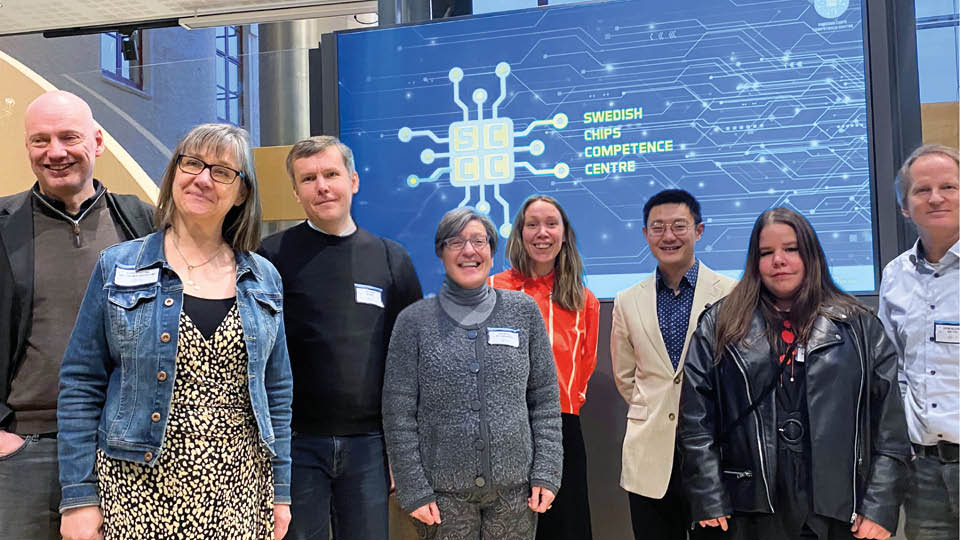
Semiconductors are the invisible engines of our time. But it is the people behind them who shape our future. Meet the team behind SCCC and explore how Sweden is strengthening its independence – at home and abroad.
In Sweden, a small but ambitious community is trying to strengthen the future of semiconductors. Their method is to connect ideas, talent, and industry in smarter, more efficient ways. At the heart of this effort is the Swedish Chips Competence Centre (SCCC), a relatively new initiative with a big mission: help companies, especially smaller ones, navigate the complex world of semiconductors.
“We connect the dots”
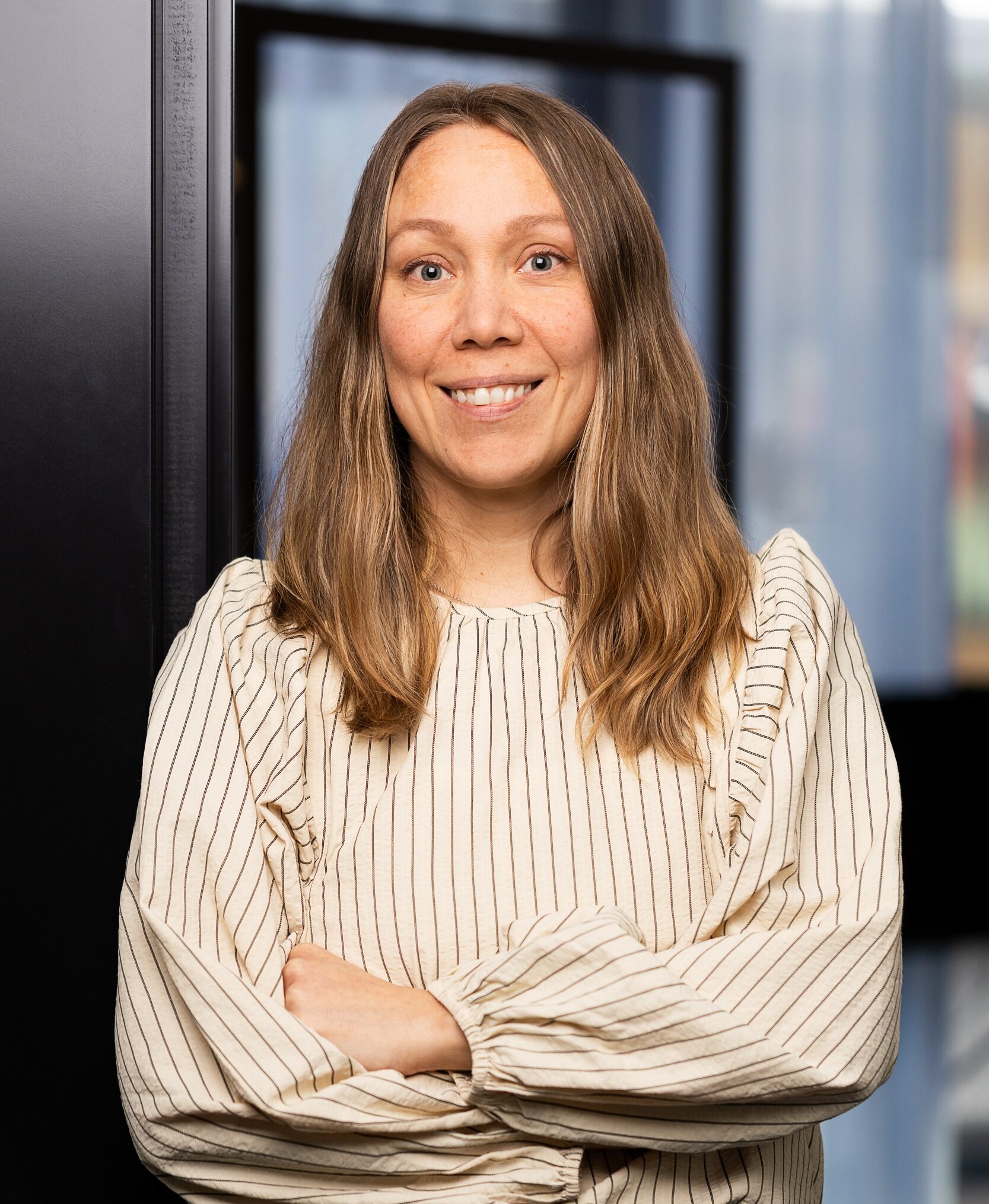
As Director of SCCC, Maria Huffman, sees the project as a hub that helps startups and small companies find funding, training, expertise, and partners. The center is part of a larger European effort born out of the EU Chips Act, which aims to strengthen Europe’s position in the global semiconductor race.
“We exist to be the connector between companies, between academia and industry, between Sweden and Europe.”
But Maria is clear: this isn’t just about big policy.
“Small companies can’t wait years for something to happen. They need support now. Otherwise, they disappear.”
That urgency shapes everything SCCC does: connecting startups and SMEs with pilot production facilities, helping them assess whether their ideas are ready for the market, and guiding them toward funding opportunities and the proper training for the road ahead.
A network designed for real people
As Outreach Manager at SCCC, Jonna Hynynen is often the first point of contact for companies trying to figure out their next step.
“Maybe you need funding. Maybe you’re wondering where to prototype your product. Maybe you just have a technical question. That’s where we come in.”
She describes SCCC as a place where companies can ask questions without needing to have all the answers first. Behind the scenes, there’s a network of experts ready to step in; engineers, researchers, and specialists across different fields.
But what excites her most is the pace of change.
“It’s a very fast-moving field,” Jonna Hynynen says with a smile. You’re always on the edge of something new.”
Turning ideas into the real thing
Pier Paolo Aurino, Technology and Growth Lead at SCCC, works on turning ideas into real-world solutions. His focus is on a different piece of the puzzle: ensuring ideas move beyond the conceptual stage.
Pier describes SCCC as “the glue” that brings researchers, startups, investors, and institutions together. Without that glue, even the most promising innovations risk falling apart before they ever reach the market.
“There’s a lot of knowledge in Sweden, but sometimes what’s missing is the connection, how to turn that knowledge into something usable.”
His role is to help companies bridge that gap. That means asking tough questions: Who will buy this? What problem does it solve? Is there a market for it?
“It’s not enough to have great technology,” he explains. “You need to understand its impact in the real world.”
Navigating uncertainty and risk
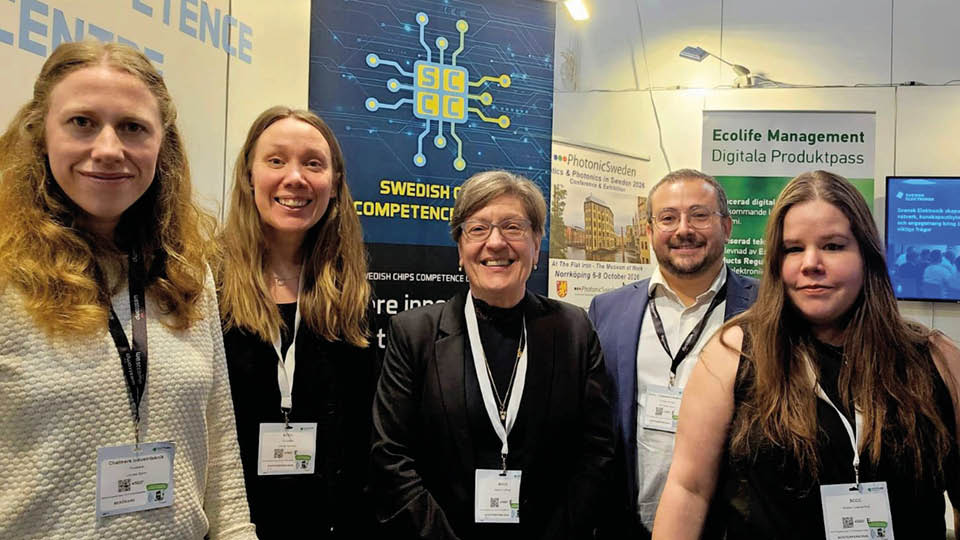
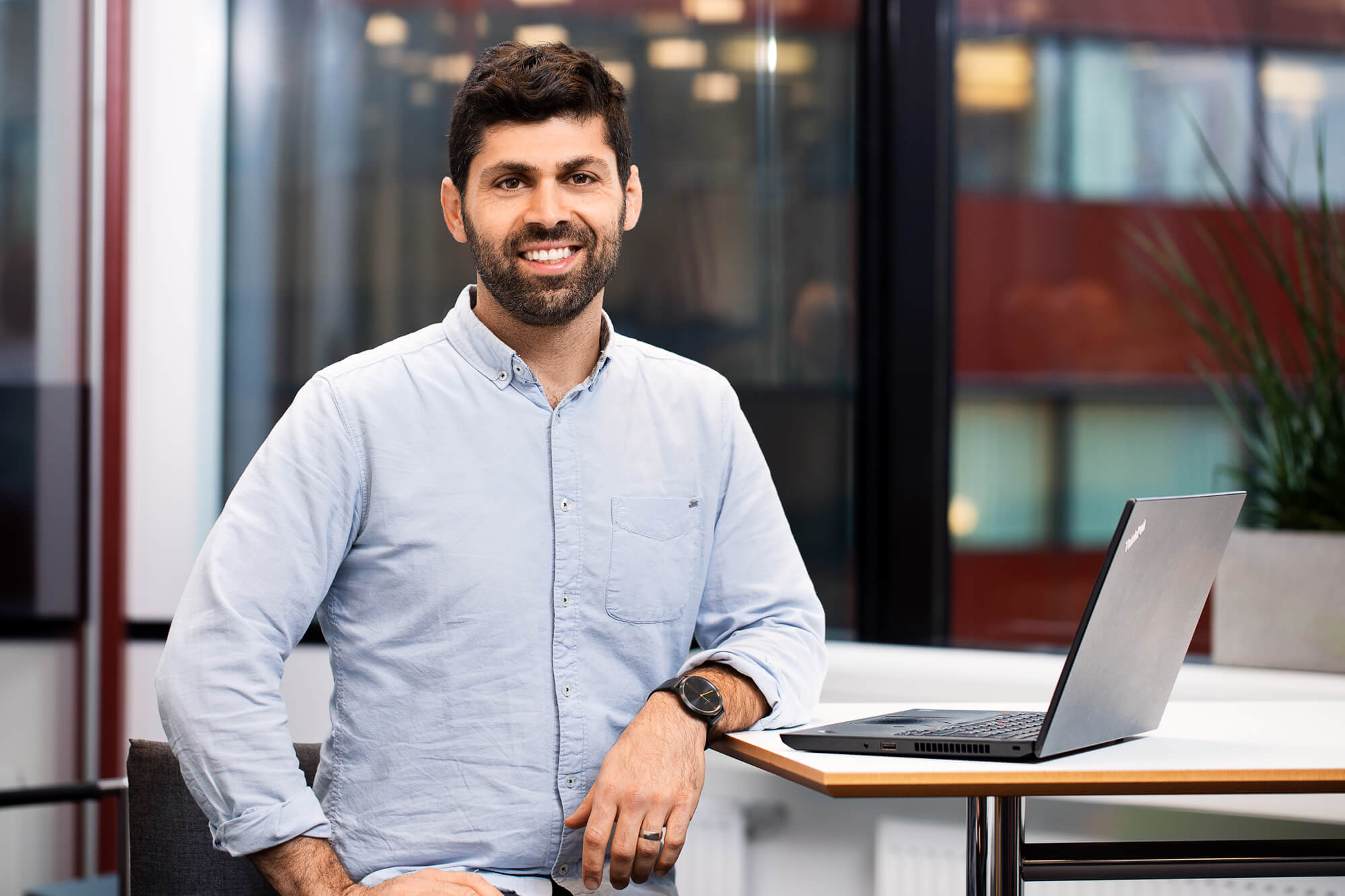
Simon He, Technical Expert at SCCC, operates closer to the engineering side. He works directly with companies trying to access advanced infrastructure like pilot lines, facilities where prototypes can be tested and scaled.
Inside a pilot line, the atmosphere is precise and controlled. Cleanrooms, bright lighting, and rows of highly specialized equipment create a setting where even microscopic particles can disrupt the process. Engineers move carefully between machines, monitoring processes where ideas begin their transition from concept to reality.
“These pilot lines are new, so we’re still discovering all the ways we can support companies with them.”
That uncertainty might sound like a drawback, but Simon sees it differently.
“It’s high-risk, but also high potential,” he explains. “We’re working very close to real-world applications.”
One example involves helping a Swedish company explore advanced chip packaging. The process includes balancing budgets, technical requirements, and expectations while coordinating with European partners, like APECS Pilot Line.
“It’s about finding the best possible solution, together.”
The talent challenge
Beyond technology, one theme keeps coming up: the people. This is a topic that Maria Huffman is particularly passionate about. She sees a need to inspire students earlier, to show them that semiconductors aren’t just for a narrow group of engineers.
“We need to start young. If you wait until university, it’s already too late. People have made up their minds.
”And then there’s another issue: retention. Sweden attracts international students, but many don’t stay.
“We educate them, and then they leave. We need to find ways to keep that talent here.”
She also points to the lack of women, a long-standing imbalance in the industry.
“There’s no lack of capability, what’s missing is the ability to recognize talent when it doesn’t look like what people expect.”
A work in progress
SCCC is still young, barely a year old. The team is small. The challenges are big. And yet, there’s a sense of momentum. Maria sums it up simply:
“If we collaborate—really collaborate—we can make a difference.”
Learn more at: sccc.se
Why SCCC matters
- Semiconductors power AI, telecom, energy, and mobility
- Europe is working to strengthen its chip independence
- Sweden has strong research but needs better industry links
- SCCC bridges the gap between innovation and market
How SCCC supports companies
- Helps find funding and partners
- Guides companies to prototyping and pilot lines
- Offers technical expertise across disciplines
- Supports early-stage ideas and scaling efforts
Why semiconductors?
Semiconductors are the foundation of modern technology. They enable electronic systems that power everything from mobile phones and cars to AI, healthcare, and defense.
EU Chips Act
A European initiative to strengthen semiconductor production and reduce dependence on Asia and the United States.
Sweden and semiconductors
Sweden has strong research and industrial expertise, but limited large-scale manufacturing. There is a high demand for engineers, materials scientists, and technicians – and a need to retain international talent.

Quench your thirst for knowledge with exciting reading
Be among the first to learn about new research in the areas of Circular Economy, Applied AI, Innovation Management, Energy, and Materials. In our newsletter, we share innovative techniques and projects that make a noticeable difference in society. You will also receive tips and invitations to interesting seminars and events within our field.