From research to reality: the CIT team behind Graphene Week
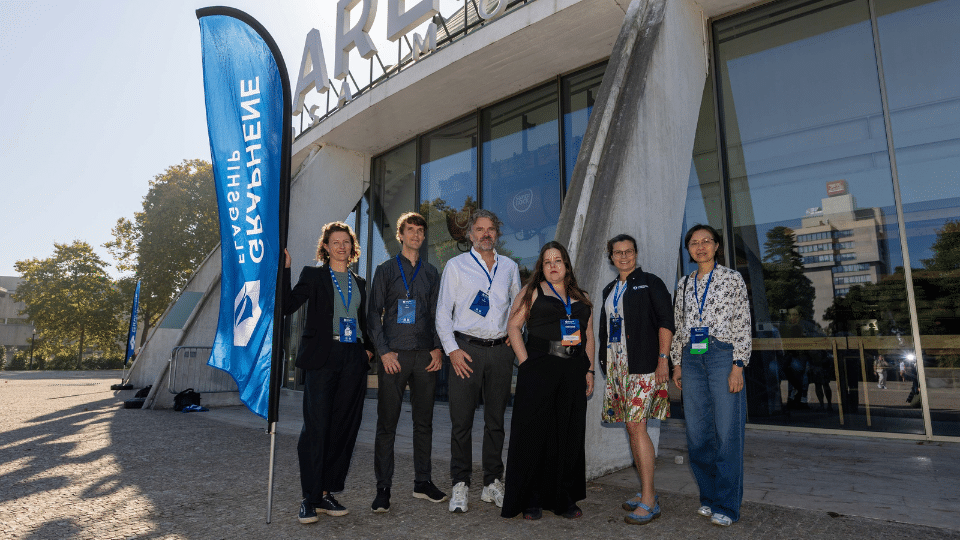
During Graphene Week in September 2026, more than 400 researchers, innovators and industry representatives from 40 countries gathered in Porto, Portugal. Over the course of an intensive week, participants shared research advances, industrial insights and new opportunities for collaboration in graphene and other two-dimensional materials.
But behind the scientific breakthroughs lies an equally important question:
How do we ensure that innovations actually reach industry and create value for society?
At Chalmers Industriteknik (CIT), that challenge is approached from many angles. During Graphene Week, CIT colleagues contributed through innovation support, communications, ecosystem development, project coordination, standardisation and industry engagement, all with the shared goal of bringing research closer to real-world application.
The team’s involvement spans multiple parts of the Graphene Flagship ecosystem. Sofia Kihlman Öiseth and Kari Hjelt lead the Innovation Forum, where researchers, companies and innovators discuss commercialisation pathways; while Dana Gilliland-Wiström and Kirsten Loewenthal support communications and dissemination activities. Through project development, standardisation, ecosystem building and industry collaboration, Jonas Löfvendahl, Lilei Ye and Johan Ek Weis help strengthen the connections needed to move innovation beyond the laboratory.
At the heart of this effort is Sofia, whose work with the Innovation Forum helps connect promising research with the people and organisations needed to bring it to market.
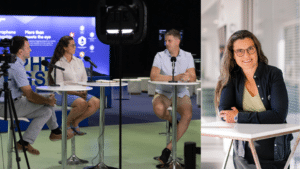
“My role within the Graphene Flagship is to support innovation and industrialisation of 2D materials through various outreach activities. During Graphene Week, I am responsible for the Innovation Forum, which this year consisted of two days of presentations and discussions on successes and challenges in commercialisation.”
Creating meeting places that matter
After eight Graphene Weeks, Sofia believes some of the most valuable interactions happen outside the conference sessions.
“Everything that happens around the formal sessions that promotes networking: lunches, coffee breaks, the Graphene Run, the welcome reception and the conference dinner.”
Those informal conversations often become future collaborations. Dana and Kirsten point to the strong sense of community that has developed over the years, while Jonas, representing both 2DSPIN-TECH and SIO Grafen, highlights the shared ambition of bringing sustainable 2D materials into industry for the benefit of society.
“My personal highlight is the people. It’s a chance to spend a week working alongside colleagues and reconnecting with familiar faces from across the community. It starts to feel like a family.”
— Dana Gilliland-Wiström
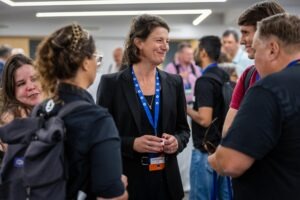
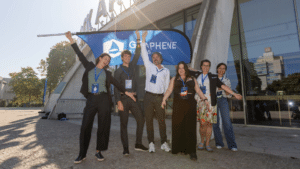
CIT team meeting on Day 1 of Graphene Week 2026
“The highlight is meeting so many people, many of whom I’ve come to know over the years, and working together towards bringing sustainable 2D materials into industry for the benefit of society.”
— Jonas Löfvendahl
Johan Ek Weis brings a uniquely broad perspective to Graphene Week through his work in standardisation, ecosystem development and Diversity in Graphene. Together, these roles highlight the many forms of collaboration needed to advance new materials from research to real-world impact.
From breakthroughs to real-world applications
A recurring theme throughout Graphene Week is the challenge of translating scientific breakthroughs into real-world applications. This is precisely where the Innovation Forum aims to make a difference.
“Graphene and other 2D materials are fantastic materials that enable great scientific discoveries for a better future, but the time it takes to go from a brilliant idea to a commercial product is very long.”
— Sofia Öiseth
The forum has become a recognised meeting place where companies, researchers and innovators can exchange experiences and discuss how to accelerate commercialisation. According to Lilei Ye, who works with the projects 2DSPIN-TECH and 2D-PL, this industry perspective is one of Graphene Week’s greatest strengths.
“Graphene Week is Europe’s premier event for showcasing the latest breakthroughs in graphene and other 2D materials. It provides a unique platform for researchers, innovators and industry leaders to exchange ideas, expand networks and build future collaborations.”
A shared contribution
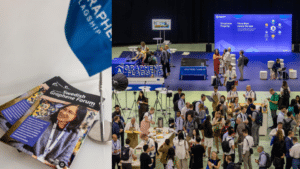
Although Sofia’s work on the Innovation Forum is highly visible, she is quick to emphasise that Graphene Week is the result of many contributions across CIT.
Through project participation, communications activities, innovation support and ecosystem building, CIT helps strengthen collaboration throughout the European graphene and advanced materials landscape. As Sofia explains:
“CIT keeps spreading knowledge about scientific breakthroughs, industry uptake, start-up journeys and innovation challenges. We create opportunities for people to meet and discuss, which promotes a faster commercialisation process.”
Looking ahead, she is particularly excited to see more technologies reach the market and to continue supporting the community that has grown around them.
“As the technologies mature, we will see more and more interesting commercial products. It’s exciting to hear about them and feel that we have played a small part in helping the 2D materials community move forward.”
Graphene Week is therefore much more than an annual conference. It is a meeting place where researchers, innovators and industry come together to build the relationships, knowledge and partnerships needed to turn scientific breakthroughs into real-world applications.

Quench your thirst for knowledge with exciting reading
Be among the first to learn about new research in the areas of Circular Economy, Applied AI, Innovation Management, Energy, and Materials. In our newsletter, we share innovative techniques and projects that make a noticeable difference in society. You will also receive tips and invitations to interesting seminars and events within our field.