AI-Driven Modeling and Degradation of Biodegradable Polymers in Nordic Climate Conditions

In Nordic climates, even biodegradable bioplastics can persist in soil for long periods or degrade incompletely into microplastics. This project develops AI‑based models that, using literature and laboratory data, predict the degradation of commonly used bioplastics under realistic Nordic soil conditions.
Biodegradable polymers are currently used in a wide range of applications, and in many cases the plastic is not collected after use for practical reasons, such as in agricultural settings. Although these materials are often classified as biodegradable, both scientific studies and governmental reports show that degradation in cold climates can be slow or incomplete. In Nordic environments, this creates a risk that even biodegradable polymers persist in soil for extended periods or fragment into microplastics, leading to uncertainty regarding their actual environmental performance.
A key challenge is that existing standardized test methods are largely conducted under idealized laboratory conditions that fail to capture the variability of real environments. Factors such as temperature, soil moisture, soil type, and material geometry strongly influence degradation processes, yet are difficult to systematically address using experimental studies alone. This may result in assessments that either overestimate or underestimate the degradability of materials in practical use.
In this preparatory case study, AI‑based predictive models for polymer degradation are developed and trained for a commonly used polymer type by combining experimental data from laboratory tests with systematically curated literature data for that polymer. Through machine learning, complex and non‑linear relationships between material properties and environmental conditions can be identified without requiring full prior knowledge of all underlying mechanisms. The goal is to develop models that provide more realistic and environmentally relevant estimates of degradation behavior under Nordic conditions.
The project is carried out through collaboration between materials and environmental researchers and experts in applied artificial intelligence. The results will contribute to improved decision support for material development and future regulatory frameworks, while also laying the foundation for a larger follow‑up project in which the models can be further developed, validated in field conditions, and applied to additional types of biodegradable polymers.
Finansier: Formas
Call: En kemikaliesäker framtid – förberedande projekt
Projectpartners: RISE Research Institutes of Sweden, Chalmers Industriteknik och Uppsala universitet.
Alireza Movahedi, projectleader at RISE.
The funder’s call for proposals page can be found here. (Swedish)


Climate footprint reduction, Sustainable E-Commerce with AI Technology
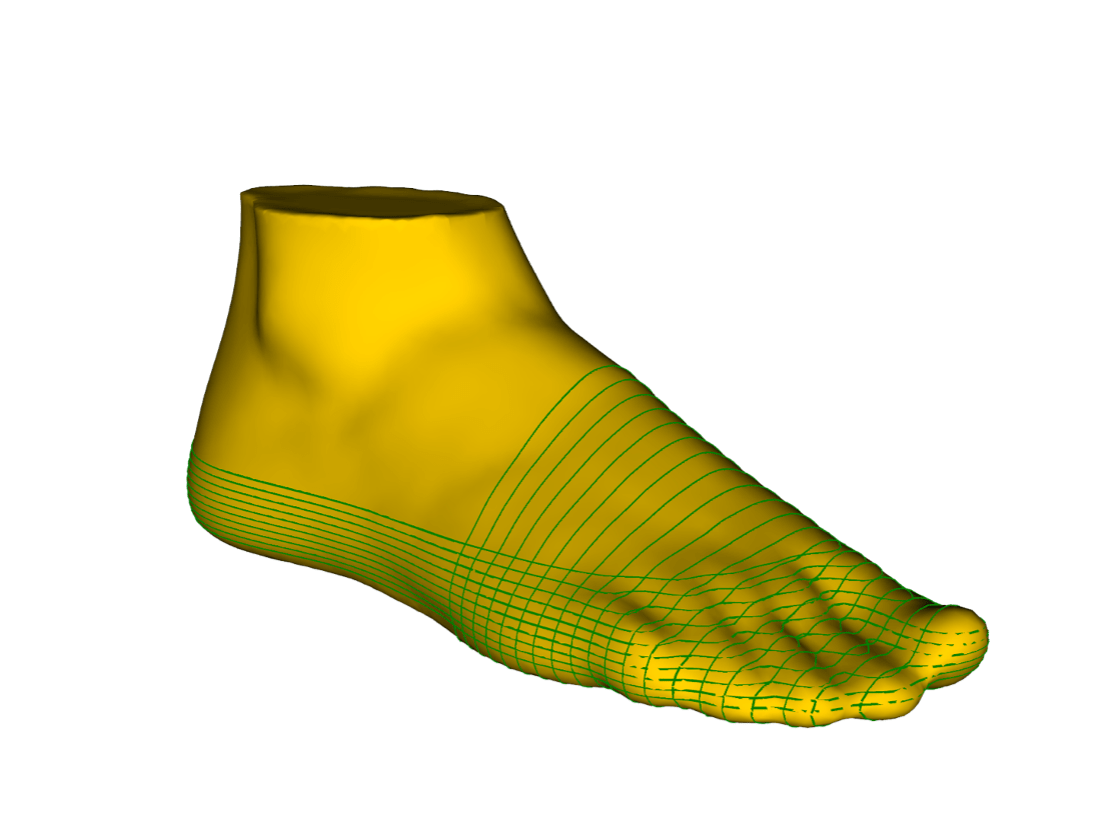
In Sweden, around 40 million shoes are sold annually, of which a third are online. Despite this, 30% of these shoes, equivalent to 4 million pairs, are returned due to sizing issue…